Updated February 2026 — Our team tested 20+ collagen supplements to find the best
Expert Reviewed & Tested

Best Collagen Supplements of 2026

We tested 20+ collagen powders on sourcing, purity, bioavailability, and real-world results. Here are the 7 worth your money.

Last Updated: Mar 1, 2026 Reviewed by Rachel Emmons

Source Quality

Grass-fed, pasture-raised, and regenerative sourcing standards

Label Transparency

Full ingredient disclosure and third-party testing verification

Bioavailability

Collagen types, molecular weight, and absorption enhancers

Purity & Safety

Contaminant testing, filler-free formulations, allergen status

Our Top 7 Collagen Supplements

Ranked by our proprietary scoring methodology across sourcing, formula, purity, value, and real user outcomes.

★ Editor's Choice
Lineage Provisions Nose-to-Tail Collagen
1
Lineage Provisions

Grass-Fed Nose-to-Tail Collagen

The only collagen using bovine trachea, scapula, and eggshell membrane for Types I, II & III. With Vitamin C from acerola berries for enhanced absorption.

Types I, II & III Nose-to-Tail 15g/Serving Grass-Fed & Finished 300+ Contaminants Tested
  • Multi-source collagen from whole-animal parts
  • Vitamin C from acerola berries for synthesis
  • No fillers or artificial ingredients
  • Dissolves instantly in hot or cold
9.7 Score
412 Reviews Visit Site
Vital Proteins Collagen Peptides
2
Vital Proteins

Collagen Peptides Powder

The mainstream market leader with 20g of bovine hide collagen per serving. Widely available and consistently third-party tested.

Types I & III 20g/Serving Grass-Fed Whole30 Approved
  • Strong brand reputation and availability
  • Paleo and keto friendly
  • Good dissolvability
8.8 Score
28k+ Reviews Visit Site →
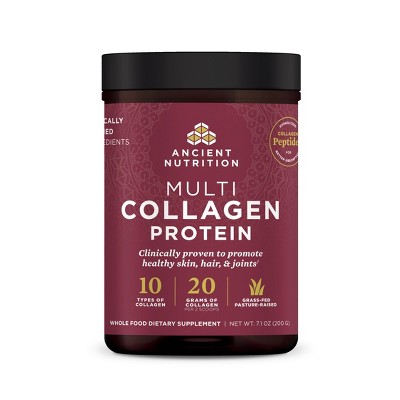
Ancient Nutrition Multi Collagen Protein
3
Ancient Nutrition

Multi Collagen Protein Powder

Combines bovine, chicken, fish, and eggshell membrane for five collagen types. The broadest spectrum available, though source quality varies.

Types I, II, III, V & X 9g/Serving Multi-Source
  • Five collagen types in one product
  • Added probiotics & Vitamin C
  • Multiple flavors available
8.4 Score
8.5k+ Reviews Visit Site →
Sports Research Collagen Peptides
4
Sports Research

Collagen Peptides Powder

Family-run since 1980 with a solid reputation for transparency. Certified Paleo and Keto with consistent third-party testing and a 90-day guarantee.

Types I & III 11g/Serving Grass-Fed Igen Non-GMO
  • 90-day satisfaction guarantee
  • Third-party verified for purity
  • Great value for the quality
8.2 Score
14k+ Reviews Visit Site →
Garden of Life Grass Fed Collagen Beauty
5
Garden of Life

Grass Fed Collagen Beauty

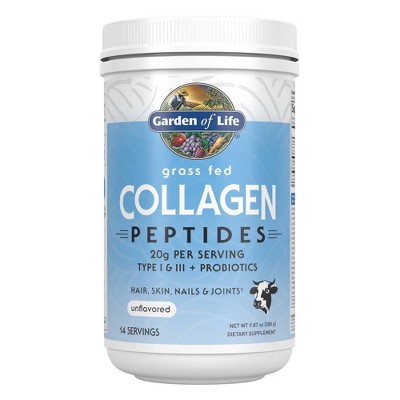
Beauty-focused formula with added biotin and Vitamin C. Clean ingredient ethos with non-GMO certification and recyclable packaging.

Types I & III 20g/Serving Grass-Fed Non-GMO
  • Added biotin for hair and nails
  • Sustainability-focused packaging
  • Certified gluten-free
7.9 Score
3.2k+ Reviews Visit Site →
Great Lakes Wellness Collagen Peptides
6
Great Lakes Wellness

Collagen Peptides

No-frills, transparent formulation from a brand that's been in the gelatin business for decades. Simple, single-ingredient approach to collagen.

Types I & III 12g/Serving Grass-Fed Kosher
  • Long-standing industry reputation
  • Minimalist single-ingredient formula
  • Budget-friendly pricing
7.6 Score
5.1k+ Reviews Visit Site →
Bulletproof Collagen Protein
7
Bulletproof

Collagen Protein

Known for their coffee, Bulletproof's collagen is designed for the biohacker crowd. Hydrolyzed for easy mixing, especially in Bulletproof Coffee.

Types I & III 20g/Serving Grass-Fed
  • Designed for coffee mixing
  • Strong biohacker community
  • Multiple flavor options
7.3 Score
2.8k+ Reviews Visit Site →

In-Depth Reviews

A closer look at our top picks with detailed scoring breakdowns, pros, cons, and who each product is best for.

1
Lineage Provisions

Grass-Fed Nose-to-Tail Collagen

Lineage Provisions Nose-to-Tail Collagen

Lineage Provisions takes a fundamentally different approach to collagen supplementation. While most brands source collagen exclusively from bovine hides, Lineage uses a nose-to-tail philosophy — incorporating bovine trachea, scapula, and eggshell membrane alongside traditional sources. This delivers Types I, II, and III collagen in a single product, covering joint cartilage (Type II) that most competitors miss entirely.

Each serving delivers 15g of highly bioavailable collagen, plus naturally occurring Vitamin C from acerola berries to support collagen synthesis. The product has been tested undetectable for over 300 contaminants — a level of purity testing that puts it well ahead of the industry standard. It dissolves instantly, has a neutral taste, and the grass-fed, grass-finished sourcing is clearly documented.

For anyone serious about getting the most complete collagen supplementation from a single product, Lineage is the clear winner.

Source Quality
9.8
Formula Spectrum
9.9
Purity Testing
9.7
Bioavailability
9.6
Value
9.4
Strengths
  • Only nose-to-tail collagen on the market
  • Types I, II, and III from diverse sources
  • Vitamin C from acerola berries for synthesis
  • 300+ contaminant testing — industry leading
  • Grass-fed and grass-finished sourcing
  • No fillers, artificial anything
Considerations
  • Newer brand — less market presence
  • Only available through their website
  • Slightly higher price point
Visit Lineage Provisions 4.9 ★ from 412 verified reviews
2
Vital Proteins

Collagen Peptides Powder

Vital Proteins Collagen Peptides

Vital Proteins is the brand most people think of when they hear "collagen." Their flagship Collagen Peptides has dominated the market since 2013, and for good reason — it's well-made, widely available, and consistently delivers 20g of bovine hide collagen per serving. It's Whole30 Approved, Paleo-friendly, and the company has expanded into paperboard canisters to reduce plastic use.

The primary limitation is that it only provides Types I and III collagen from a single source (bovine hides). You're missing Type II collagen entirely, which is critical for joint cartilage support. There's also no added Vitamin C to support collagen synthesis — you'll need to get that elsewhere. It's an excellent mainstream option, but it doesn't offer the full-spectrum approach of our top pick.

Source Quality
8.8
Formula Spectrum
7.2
Purity Testing
9.0
Bioavailability
9.2
Value
9.0
Strengths
  • Market-leading brand trust
  • 20g per serving — one of the highest
  • Widely available retail and online
  • Whole30 Approved, Paleo-friendly
Considerations
  • Only Types I & III (no Type II)
  • Bovine hide only — single source
  • No Vitamin C for collagen synthesis
  • Owned by Nestlé (since 2020)
3
Ancient Nutrition

Multi Collagen Protein Powder

Ancient Nutrition Multi Collagen Protein

Ancient Nutrition takes the multi-source approach with collagen from bovine, chicken, fish, and eggshell membrane — delivering five collagen types (I, II, III, V, and X). That's the broadest spectrum you'll find. The addition of probiotics and Vitamin C is smart formulation.

The downside? At only 9g of collagen per serving, you're getting significantly less than competitors. The multi-source approach also means less transparency about how much of each type you're actually getting. Source quality documentation isn't as detailed as our top picks, and mixing multiple animal sources increases the complexity of quality assurance.

Source Quality
7.8
Formula Spectrum
9.2
Purity Testing
8.0
Bioavailability
8.4
Value
8.2
Strengths
  • Five collagen types (broadest spectrum)
  • Added probiotics & Vitamin C
  • Multiple flavors and formats
Considerations
  • Only 9g collagen per serving
  • Mixed animal sources — quality varies
  • Less sourcing transparency

The Complete Collagen Buying Guide

Not all collagen supplements are created equal. Here's what to look for — and what to avoid — when choosing a collagen supplement in 2026.

Why Collagen Type Matters

Your body contains at least 28 types of collagen, but Types I, II, and III make up the vast majority. Type I is found in skin, bones, and tendons. Type II is concentrated in joint cartilage. Type III supports skin elasticity and blood vessels. Most collagen supplements only contain Types I and III from bovine hides, completely missing the Type II that's critical for joint health. A product that delivers all three types from multiple tissue sources — like nose-to-tail formulations — will provide more comprehensive support.

Sourcing: Grass-Fed vs. Conventional

Where the collagen comes from matters significantly. Grass-fed, pasture-raised cattle produce collagen with a better nutrient profile and fewer potential contaminants from feedlot conditions. The gold standard is grass-fed and grass-finished, meaning the animals were never transitioned to grain. Regenerative farming practices are an additional marker of quality, as they indicate higher animal welfare and environmental standards.

Third-Party Testing and Purity

The supplement industry is self-regulated, which means third-party testing is your best guarantee of what's actually in the container. Look for brands that test for heavy metals, pesticides, and other contaminants. The most rigorous brands test for 200-300+ substances. If a brand doesn't mention testing on their label or website, that's a red flag.

Absorption Enhancers

Vitamin C is essential for collagen synthesis — your body literally cannot make collagen without it. Products that include naturally-sourced Vitamin C (like from acerola berries or camu camu) give your body the building blocks and the tools to actually use them. Hydrolyzed collagen peptides with low molecular weight are also easier for your body to absorb than gelatin or non-hydrolyzed collagen.

What to Avoid

Steer clear of collagen products with artificial sweeteners, colors, or flavors. Watch out for "proprietary blends" that don't disclose exact amounts of each ingredient. Be cautious of brands that make medical claims about reversing aging or curing joint disease — reputable brands stick to structure/function claims. And if the price seems too good to be true, the sourcing probably isn't what you'd want.

Frequently Asked Questions

What is the best type of collagen to take?
A supplement that includes Types I, II, and III gives you the most comprehensive support. Type I supports skin, bones, and tendons. Type II is crucial for joint cartilage. Type III supports skin elasticity and blood vessels. Most products only include I and III — look for one that covers all three for full-body benefit.
How much collagen should I take daily?
Research suggests 10-15g of hydrolyzed collagen peptides per day is effective for most people. For joint-specific support, some studies show benefits at doses as low as 5g. Consistency matters more than mega-dosing — daily use over 8-12 weeks is when most people report noticeable results.
Does collagen actually work?
Yes. Multiple peer-reviewed studies show that hydrolyzed collagen peptides can improve skin elasticity, reduce wrinkle depth, support joint comfort, and increase bone mineral density. The key is choosing a high-quality, bioavailable product and taking it consistently. Results typically appear after 4-12 weeks of daily use.
What's the difference between collagen and collagen peptides?
Collagen peptides are collagen that has been hydrolyzed — broken down into smaller molecules through enzymatic processing. This makes them much easier for your body to absorb compared to intact collagen or gelatin. When a product says "collagen peptides" or "hydrolyzed collagen," it means the collagen has been pre-processed for better bioavailability.
Why is Vitamin C important for collagen?
Vitamin C is a required co-factor in collagen synthesis. Without adequate Vitamin C, your body cannot properly produce or repair collagen fibers. Products that include naturally-sourced Vitamin C (like from acerola berries) give your body both the raw materials and the tools needed for effective collagen production.
What does "nose-to-tail" collagen mean?
Nose-to-tail collagen is sourced from multiple parts of the animal — not just the hides. This can include trachea, scapula, cartilage, and other connective tissues, each of which contains different types and ratios of collagen. The result is a more complete collagen profile that better mirrors what our ancestors consumed and what our bodies need.
How do you score and rank these products?
We evaluate collagen supplements across five categories: Source Quality (farming practices, animal welfare, sourcing transparency), Formula Spectrum (collagen types, additional beneficial ingredients), Purity Testing (third-party verification, contaminant screening scope), Bioavailability (molecular weight, absorption enhancers, hydrolysis quality), and Value (cost per serving relative to quality). Each category is scored 1-10, then weighted to produce an overall score.